Written by: Ninna Begntsson
29.10.26
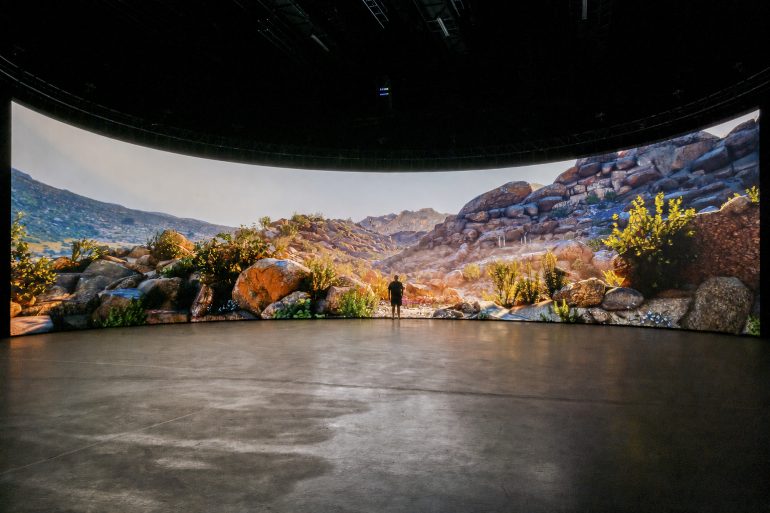
From MMC Studios’ vast LED stages in Cologne to the new IDA Hub in Estonia, virtual production is expanding across Europe, promising greater creative freedom and lower costs. But can it overcome skills gaps and high investment costs to become an everyday tool for producers?
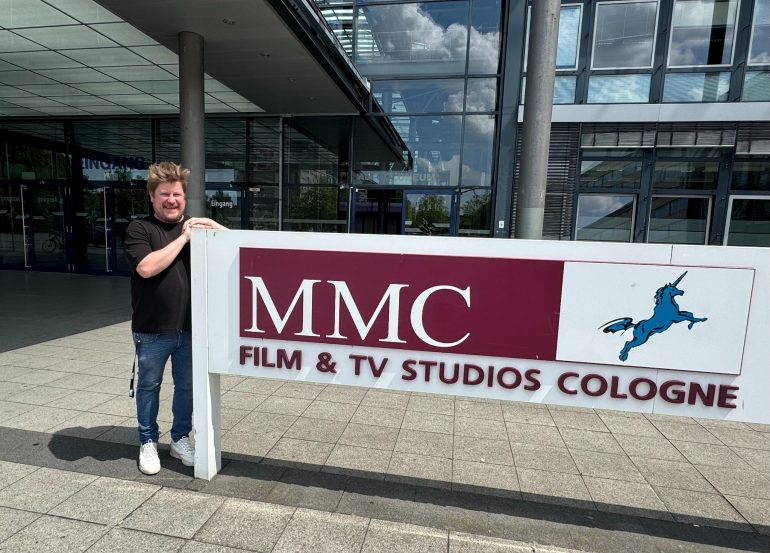
From desert landscapes, Antarctica and 19th-century salons to alien planets and fantasy worlds, magic is an everyday occurrence at one of Europe’s largest film studios, in Cologne, Germany. Covering an area the size of 22 football pitches, MMC Studios – short for Magic Media Company and dubbed “Europe’s Hollywood” – is at the forefront of new technology and virtual production.
“The technology is now used everywhere. It can cut budgets and provide more shooting time. On location, you may have only three hours of sunlight, but here, you can have sunlight, darkness or any colour and conditions for as long as you want,” says Bastie Griese, managing director of MMC Movies.
Black and grey walls, rows of spotlights overhead – we are standing inside one of the world’s tallest soundstages. One of 20 at the complex, it spans 2,000 square metres and rises 26 metres. With 900 square metres of movable LED walls and Unreal Engine technology, it can be become anything from a lunar landscape to the Swedish countryside in the Pettson and Findus films.
“It is changing production, by reducing travel and opening up new possibilities. You can shoot in a desert and, two hours later, in an icy landscape, on the moon or in a historical setting. Actors know where they are because they can see the environment around them,” says Griese, adding:
“We let the zeppelin Hindenburg explode in here. For Stowaway, we built the International Space Station and floated it around in the room. For a children’s film, we had scenes set in the mountains, so we let them perform in front of the LED wall, and they appeared to be there.”
New technology and AI are reshaping film and television, as VP surges across Europe and the Nordics. One recent example, Netflix’s The Case (Blodsoffer) used VP Nordic’s pop-up stage at Independent Studios to shoot several car scenes in one day, switching between day and night.
Europe’s virtual production market is forecast to grow rapidly. US market research company Grand View Research projects revenues of USD 897 million in 2026 and USD 3.32 billion by 2033, while Fortune Business Insights puts the 2026 figure at USD 1.16 billion, reflecting different market definitions.
Virtual production is seen as a more cost-effective and flexible way of making film and TV, that could help smaller studios attract big prestige productions. Yet questions remain. Are there enough productions to keep stages occupied, can smaller companies afford and master the technology, and will VP become an everyday tool rather than one reserved for prestige projects?
A University of Kent study published in March 2026 surveyed 71 UK micro and small production companies, and found strong interest in virtual production, but limited readiness. While 83% were interested, 51% lacked a suitable high-performance computer, and only 37% had practical experience; cost and an unclear business need were the main barriers.
A similar conclusion was reached in a peer-reviewed EU-funded CRESCINE study, published in Frontiers in Communication in January 2026, with 355 film professionals across 17 countries. Although not focused specifically on VP, it found strong demand for business, finance and technology skills, while financial barriers limited access to training.
New technology can also pose creative challenges, in planning and craftsmanship, says Emil Wiklund, CEO of the Swedish production company Unlimited Stories, who has explored several LED studios for upcoming productions.
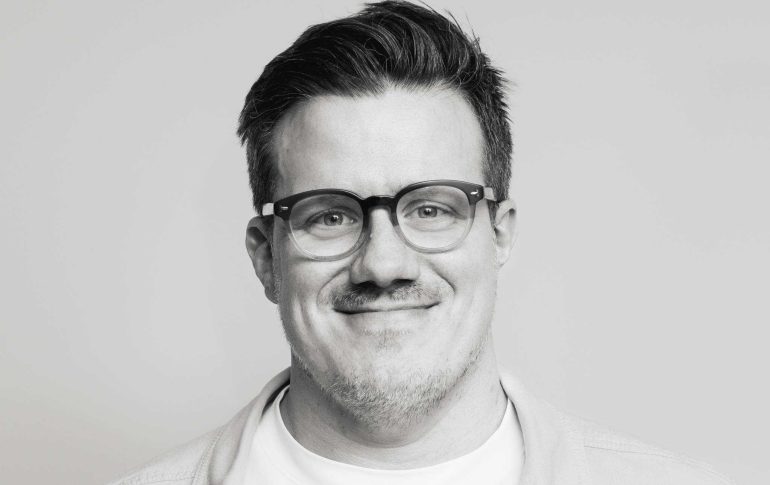
“When you walk into a studio, you think: ‘Wow, look at the possibilities’ – but you also see the limitations. The area is small, and everything must be planned down to the millimetre for the shoot to work. There is no room for spontaneity, and the planning takes almost as long as preparing to shoot on location. So it is not necessarily any easier.”
In the small town of Jõhvi, near Estonia’s border with Russia, a unique new production complex and innovative film-industry ecosystem is taking shape, a new kind of creative and film-industry hub in the Baltics. The EU-backed USD 18.2 million IDA Hub will include a 21,500-square-foot soundstage, post-production facilities and creative workspaces. Led by IVIA, IVEK and Tehnopol, a science and business park, it combines regional film funding, talent development and film-tech acceleration.
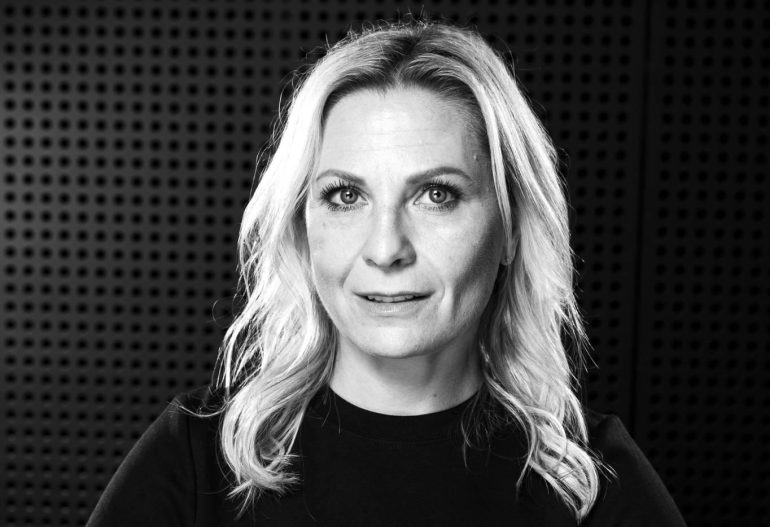
“We want to build an ecosystem where filmmakers, creative companies, start-ups and technology experts work together. Our ambition is to make north-eastern Estonia attractive to international film and audiovisual productions, while creating opportunities for local people and businesses. We are not simply building studios; we are building a new creative economy,” says Maris Toomel, Marketing Manager at IDA Hub.
The centre officially opend on October 15, with its first shoots already taking place ahead of the opening, and with further productions and partnerships in development. Toomel believes VP is moving from being an exclusive technology towards much wider use.
“We see technology as a tool, not as the goal. Virtual production opens up new creative possibilities and makes productions more flexible and efficient. But technology alone does not create a successful film industry; we must invest in people and businesses.”
In Cologne, Bastie Griese takes us on a tour of the sound stages and set-construction workshops, proudly opening the control room. In the summer heat, we walk past small shops and restaurants – façades and charming backlot street sets for one of Germany’s most popular TV series.
Alongside films and series such as The Physician (Der Medicus), Buddenbrooks, Flesh of the Gods and Amélie, the studio hosted Nordic productions, including The Lion Woman (Løvekvinnen) and Operation Napoleon (Napóleonsskjölin/Gletschergrab). Griese hopes to see more collaboration with Nordic production and distribution companies. On The Lion Woman, MMC Movies served as a German co-producer, and parts of the film were shot in Cologne, while TrustNordisk handled international sales. The two companies later crossed paths again on the Swiss-German drama Late Shift (Heldin), co-produced by MMC Zodiac and sold internationally by TrustNordisk.
“We are open to European co-productions, and want to do more with Scandinavia. Nordic content is amazing – just look at the Oscars and major festivals over the past decade. This is a great opportunity for us to work with directors, screenwriters and producers. And having TrustNordisk on board is a win for both sides.”
He believes Europe compares very favourably with markets such as the US when it comes to being at the forefront of new technology, VFX and virtual production.
”I think Germany is interesting for productions from all over the world, because the funding systems are very attractive at the moment. We have a federal fund through which productions can receive 30 per cent of their German spending financing. The good news is that even foreign cast and crew count as German spent while they are working here. And you can combine that with regional subsidies”, says Bastie Griese, adding:
”North Rhine-Westphalia, the region where we are based, has Germany's strongest regional fund, where you can get up to 2 million euros for one project in addition to federal funds. This makes it very attractive.”
The market is changing rapidly. Looking five years ahead, what do you think will have changed the most in this field?
”I think the combination of virtual production, visual effects and AI will bring the biggest change. It won’t replace everything completely. There will always be real sets and physical construction, but combining these methods will be transformative. AI will also optimise workflows across post-production as well as production, from budgeting and choosing locations to selecting the right tax incentive.”
Maris Toomel argues that cash rebates and regional funds give smaller countries opportunities to compete with larger markets. And she’s positive about the future.
“I don’t think smaller countries should try to become another Hollywood; we should focus on what makes us unique. Virtual production makes geography much less important than it used to be. Today, creativity and collaboration matter much more. People often ask me: ‘Why Jõhvi? Why Estonia?’, but I believe innovation should not happen only in capital cities.”
RELATED POST TO :
PRODUCTION
/
NORDIC INDUSTRY NEWS
/
INTERNATIONAL