Written by: Moa Aulanko
23.04.26
Once seen as global leaders in equality, the Nordics now face setbacks in film and TV: “We need to stick together in the Nordics to maintain what we have achieved.”
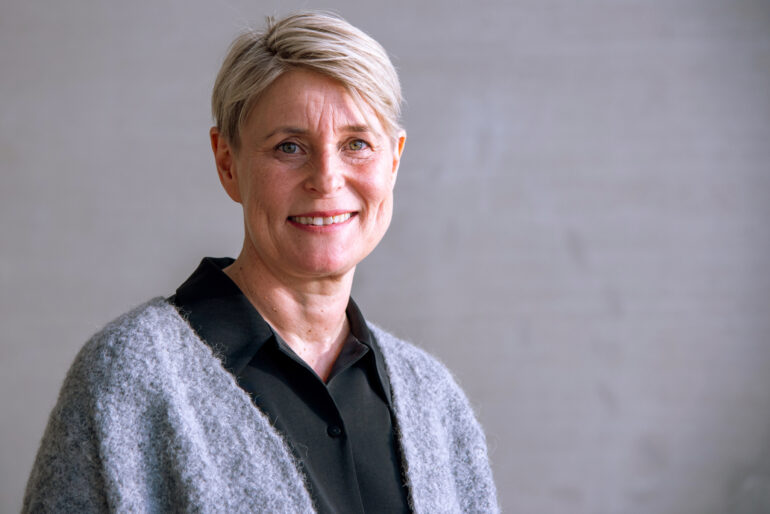
Sweden used to be a role model in gender discussions, but according to Maria Jansson, Swedish Professor of Gender Studies and Associate Professor of Political Science at Örebro University, Sweden, no longer has a leading role:
”One challenge which is especially pertinent in Sweden is that the recent governmental policy agenda has done a lot to exclude gender equality and diversity. The situation isn’t the same in the other Nordic countries nor in Europe, but there is a wave of right-wing and conservative politics that are contesting gender equality and diversity goals.”
A few years ago, the Swedish Film Institute received criticism for putting too much focus on gender equality:
“This was of course not true. One interpretation is that when Anna Serner, the former CEO, was no longer at the Swedish Film Institute, and we had this backlash in Sweden regarding gender discussions, the Norwegian Film Institute was ready to pick up and take the lead on these issues. Now the Norwegian Film Institute is still very much working with gender equality, and trying to further it in the ways it's possible to do.”
In 2024, the share of women in projects that received production funding from the NFI was 50 per cent. 2024 also marked the first year when female directors had larger budgets than their male counterparts in Norway.
The same challenges that have been present in the industry for a long time still exist today. There are fewer women holding senior and creative positions in the industry. According to the European Audiovisual Observatory, almost half of the directors that graduate film school in Europe are women (44%), but only 27% of the directors of European feature films were women on average from 2020 to 2024 (CLICK HERE).
“There are a lot of features in the creative industries that impede women’s possibilities and that are hard to combine with motherhood. Productions often take place very intensely during very long hours and sometimes abroad, and that doesn’t align well with the Nordic approach to raising children. Many of these features scare women away,” Jansson adds.
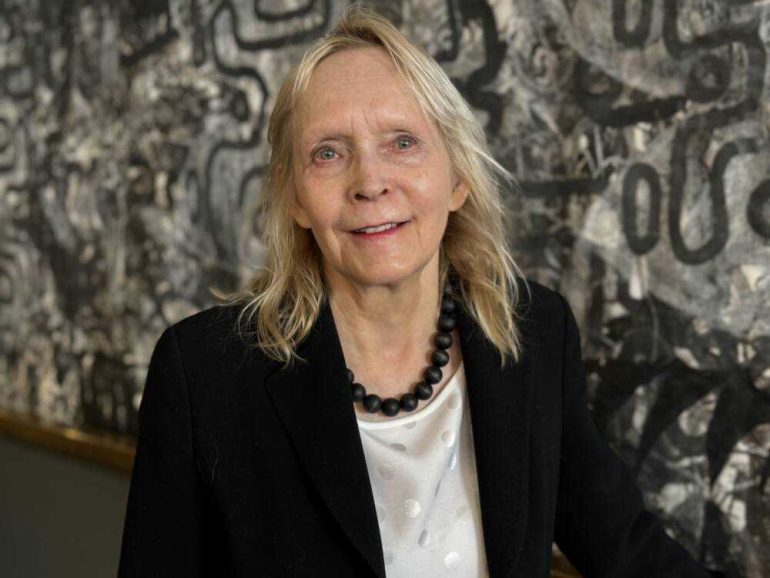
Although gender statistics from Finland also show a trend of more male directors and screenwriters in general, dialogues around gender and diversity are encouraged through an Equality tool for productions. The tool was initiated by Women in Film and Television Finland, and developed by WIFT Finland’s former Executive Director, lawyer Eeva-Sofia Anttonen. Today it is mandatory for productions that apply for funding from the Finnish Film Foundation.
“The tool was created because the discussions about equality didn’t lead anywhere, and the audiovisual industry was mostly white male dominated for a long time. The tool is a systematic aid for people to consider these issues and talk about them seriously,” says Marjaana Mykkänen, director, producer, and Finland’s representative board member of Women in Film & Television International (WIFTI). The tool considers Finnish legislation, and is based on the Finnish Gender Equality Act. It is therefore also a juridical production tool. Mykkänen underlines the need for concrete equality measures concerning the tool that became mandatory in April 2025 for funding applicants:
“If using the tool is voluntary, it becomes just another form to fill out, and easily ignored, especially by those who would most benefit from the challenge to conventional thinking. Funders and media organisations in the Nordic countries could easily adopt the Equality tool as one of their requirements to support the work in the industry, which would also neutralise the discussions that in some countries are really infected. The tool itself is neutral and makes the discussions around equality more normalised – and that might be its strongest impact.”
There have been claims across the industry that equality measures are a threat to creative and artistic freedom. Actor and Professor of Acting at the University of the Arts Helsinki, Elina Knihtilä, who heads the board of WIFT Finland, explains that the tool is not meant to censor, but rather to raise awareness around how content is created:
“The point is to improve quality and broaden it, not to narrow it.”
The Nordics have been seen as a role model in equality internationally, also within the film and TV industry. But the statistics tell another story. Non-binary persons and ethnic minorities are often cast in roles that mainly represent their minority.
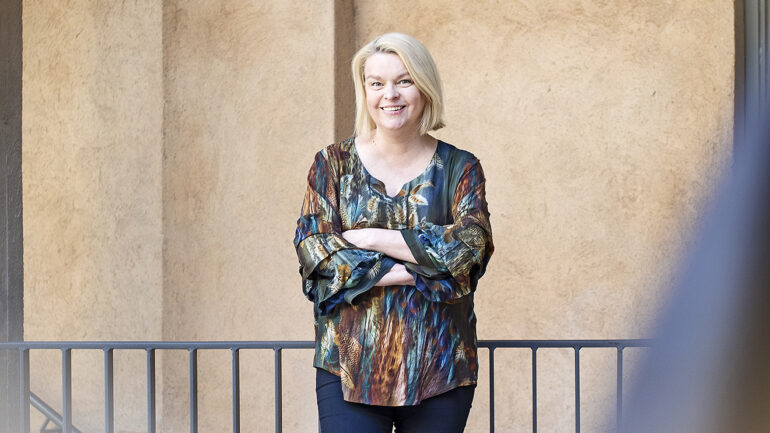
“We need role models and real diversity here. The more diverse storytellers we have, the more diverse the stories will be,” Knihtilä concludes.
Mykkänen has similar thoughts:
“It is important to diversify. Film and media strongly influence how society perceives differences, and I think one of the missions of art is to shape how those differences are portrayed.”
Diversity on screen has become more common, but often through stereotypes, according to Jansson:
“The criticism of so-called Netflix-diversity is that it is quite stereotypical, as it draws on global discourses on diversity and ethnicity and a lot of racial stereotyping. And it is commercial in the sense that if it doesn’t pay off, it will probably be deleted. But by acknowledging commercial diversity, it creates a labour market for people who are not white, middle-class men. And this is similar to gender equality, it will go away if you don’t talk about it.”
In ARTEF’s 2026 Think Tank report, A New Europe Must Emerge (CLICK HERE), presented at the Göteborg Film Festival earlier this year, the industry is described as operating in a time of fear and uncertainty, in which it is easier to rely on tried-and-tested formulas than to invest in new, untested narratives. According to the report, diversity alone isn’t enough, it must also be inclusive. Decision-making structures also need to reflect diversity. In other words, diversity must extend beyond on-screen representation, to creative control, ownership and leadership positions beyond white male dominance. Who operates in leadership positions affects diversity:
“We know from research that gender equality is relying a lot on having certain persons who are invested in this work, in order to be implemented,” Jansson says.
ARTEF’s report also underlines the importance of film schools – from curriculums and formed networks, to who is admitted to study. Knihtilä is teaching young adults at the University of the Arts Helsinki, and is hopeful that young people will change how the industry is shaped:
“We talk a lot with the students about issues regarding representation, and I think we have a younger generation that is more conscious than us fifty-somethings. We should also make room for young creators and their perspectives – the equality work would develop with these socially aware young artists.”
Stronger together
Collaboration within the Nordic countries is important, and an established network around equality in the Nordics could benefit the industry:
“We need to stick together to go forward and maintain what we have achieved until now,” Mykkänen says.
The Nordic countries are branded as gender equal countries. Jansson mentions Spain as an example of a country that still looks up to Sweden in their own work with equality. But being role models comes with a responsibility:
“Right now statistics suggest that we are not role models. If we as Nordics want to remain something to look up to, we need to work for it. That work is also painful, and requires a community, because no one can do it alone. I would wish for collaboration between the Nordics within these themes,” Knihtilä says.
The work ahead continues, and plans for the future are on their way:
“If we can develop the Equality tool and make it Nordic and then European, then we as WIFT have left a really important mark on the development of equality and diversity in Europe. A mark with long-lasting effects that reach many parts of society,” Mykkänen says.
To access the tool: CLICK HERE.
RELATED POST TO :
CORPORATE
/
NORDIC INDUSTRY NEWS
/
NORDICS